


Find the Best Value in a 1 Carat Emerald Cut Diamond
To choose a beautiful 1 carat emerald cut diamond, focus first on a clean-looking stone with strong symmetry, a balanced rectangular shape, and color and clarity that look good to your eye. A practical starting point is a VS2 or better clarity grade and G-H color, then compare stones in person or through detailed videos before paying for higher grades.
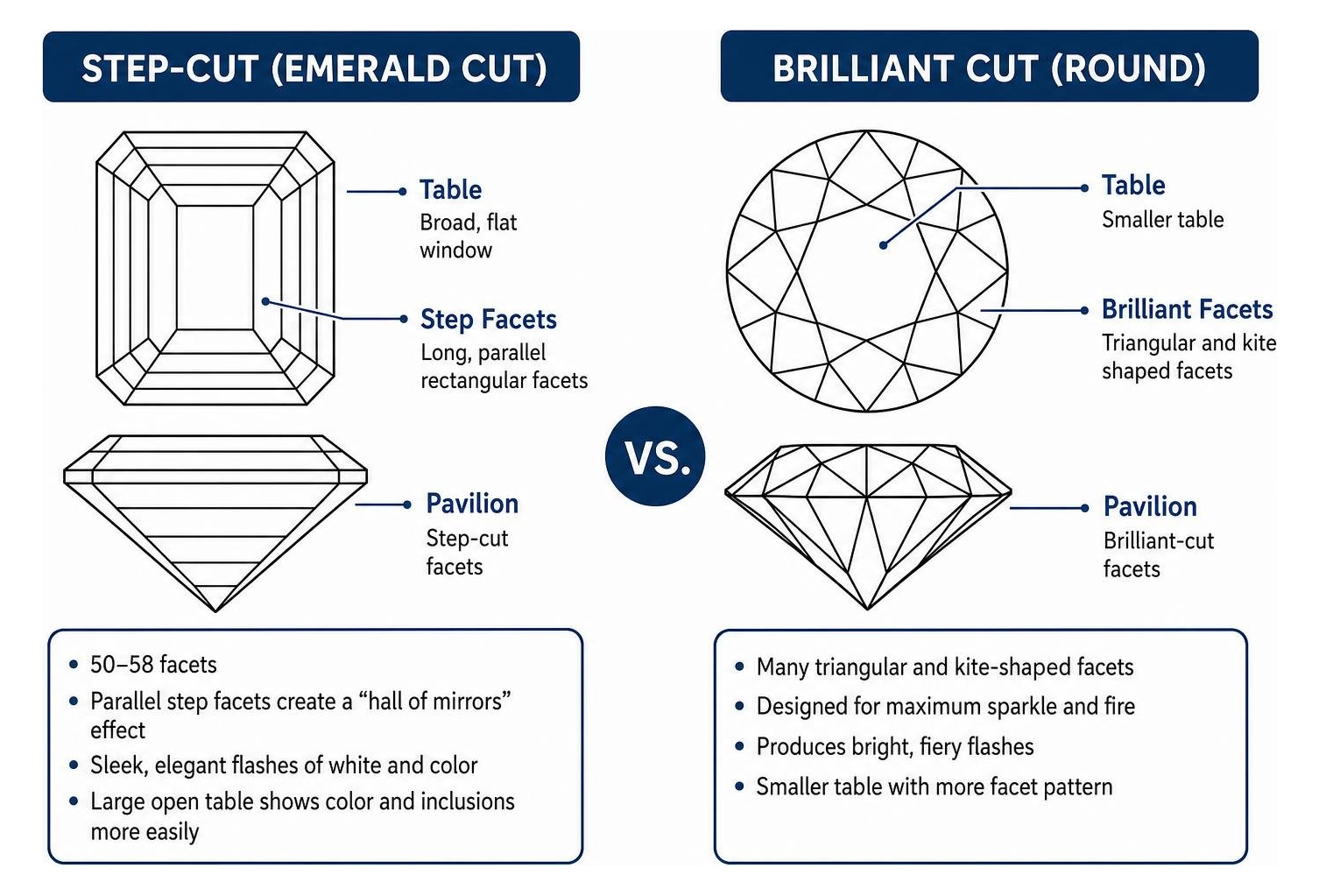
Emerald cuts stand apart because they use long, parallel step facets rather than the sparkle-heavy pattern of a round brilliant. The result is a sleek, mirror-like "hall of mirrors" effect. It is elegant and refined, but the large open table can also reveal color and inclusions more easily.
At about 7.0 mm by 5.0 mm, a well-proportioned 1 carat emerald cut diamond offers meaningful finger coverage without moving into a much higher carat-price range. It can also cost about 10% to 20% less per carat than a comparable round brilliant diamond.
This guide will help you weigh cut, ratio, clarity, color, setting protection, and price so you can find the point where beauty and budget meet. For a broader look at how step cuts compare with other diamond shapes, the diamond cut guide from Wikipedia explains the geometry behind the sparkle.
Understanding the Anatomy and Value of a 1 Carat Emerald Cut Diamond
To appreciate why an emerald cut looks so distinct, we need to look under the hood—or rather, into the pavilion. While brilliant cuts rely on triangular and kite-shaped facets to bounce light in chaotic, fiery flashes, emerald cuts feature rectangular, concentric step facets running parallel along the stone.
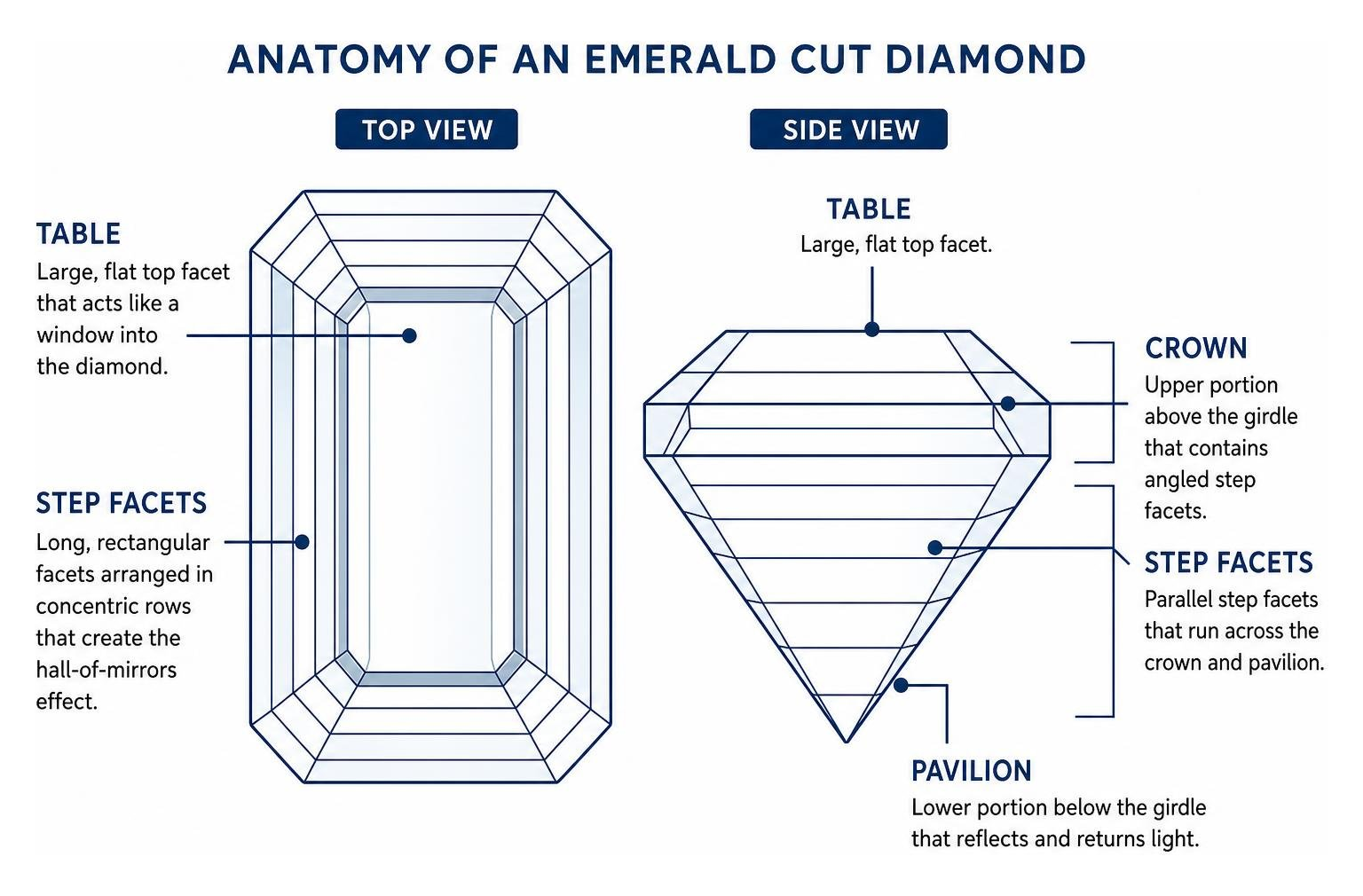
An emerald cut typically contains 50 to 58 facets. Its signature broad, flat upper facet—known as the table—acts like a crystal-clear window into the center of the diamond. When light strikes these step facets, it produces flashes of white and colored light known as the "hall-of-mirrors" effect. Instead of glittery sparkle, you get stately, architectural elegance.
Beyond aesthetics, there is a financial advantage to choosing this cut. When diamond cutters shape a rough gem into a round brilliant cut, they often lose 50% or more of the original rough stone. Emerald cuts, on the other hand, closely follow the natural cubic crystal structure of rough diamonds. This allows diamond cutters to retain a much higher yield of rough material, keeping manufacturing costs lower. That efficiency is passed directly along to you, making an emerald cut roughly 10% to 20% less expensive per carat than a round brilliant of identical carat weight and quality.
Furthermore, an emerald cut distributes its weight across a broad top surface. A typical 1-carat round brilliant measures roughly 6.4mm to 6.5mm across. In contrast, a well-cut 1 carat emerald cut diamond measures around 7.0mm long by 5.0mm wide with an average depth of 3.5mm. Its elongated rectangular profile covers significant real estate on the finger, often appearing visually larger than a round stone of the same weight.
| Feature | 1 Carat Emerald Cut Diamond | 1 Carat Round Brilliant Diamond |
|---|---|---|
| Typical Dimensions | ~7.0 mm x 5.0 mm x 3.5 mm | ~6.4 mm x 6.4 mm x 3.9 mm |
| Facet Style | Step cut (concentric rectangles) | Brilliant cut (triangles & kites) |
| Number of Facets | 50 to 58 facets | 57 to 58 facets |
| Visual Character | Hall-of-mirrors, bold light flashes | High scintillation, fiery sparkle |
| Relative Price | 10% to 20% lower per carat | Industry baseline / Premium |
| Rough Crystal Yield | High (follows natural shape) | Lower (up to 50%+ loss) |
Evaluating the 4Cs to Maximize Beauty and Budget
Because the emerald cut has an open table and clean lines, shopping for one requires a slightly different strategy than shopping for brilliant cuts. You cannot rely on dazzling sparkle to hide imperfections. Balancing cut proportions, clarity, and color is essential to getting the best value.
Choosing the Right Ratio and Dimensions for a 1 Carat Emerald Cut Diamond
Unlike round diamonds, which have standardized cut grades from gemological labs like the GIA, fancy shapes such as emerald cuts do not receive an overall cut grade on grading reports. That puts the responsibility on you (and your jeweler) to evaluate the diamond's proportions.

Length-to-Width Ratio
The length-to-width (L/W) ratio determines the rectangular outline of the diamond:
- 1.30 to 1.40: A slightly squarer, compact rectangle.
- 1.40 to 1.50: The classic, traditional emerald cut proportion that most buyers seek.
- 1.50 to 1.60+: A noticeably long, slender rectangle that creates an elongated silhouette on the hand.
Table and Depth Proportions
To ensure the stone captures and returns light effectively without appearing dull or see-through:
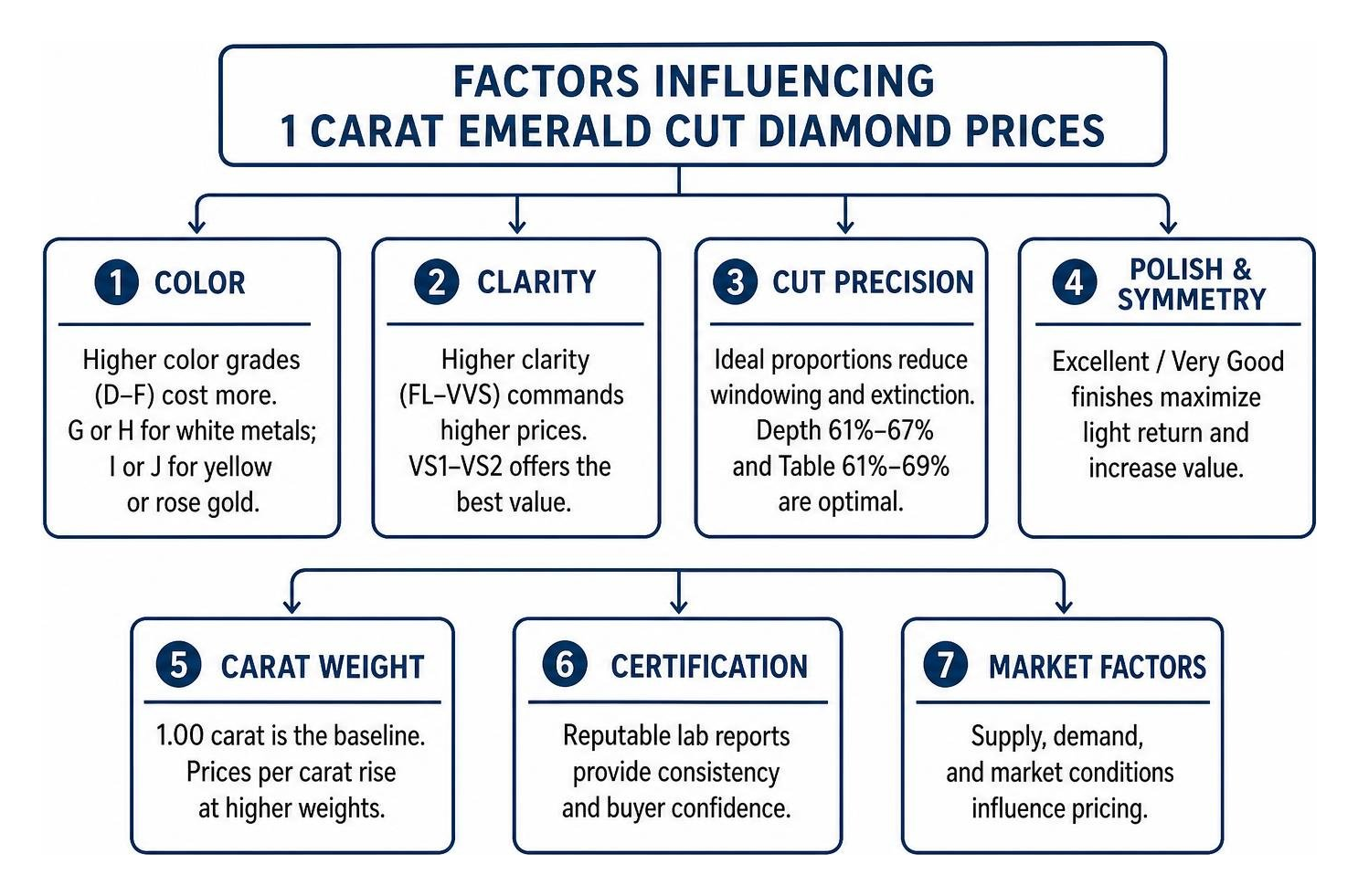
- Table Percentage: Aim for 61% to 69%. A table that is too wide flattens the stone's architectural depth, while one that is too small limits light entry.
- Depth Percentage: Look for 61% to 67%. If a stone is too shallow, light leaks straight out the bottom, causing "windowing" (where you can see straight through the stone like clear glass). If it is cut too deep, excess weight hides beneath the setting where nobody can see it, making the diamond look smaller than its 1-carat weight suggests.
- Symmetry: Look for "Very Good" or "Excellent" symmetry. Flawed facet alignment disrupts the clean step reflections and creates dark extinction zones across the stone.
Clarity and Color Recommendations for a 1 Carat Emerald Cut Diamond
The step-cut geometry means that clarity and color behave very differently in an emerald cut than they do in a round or cushion cut.
Clarity: The Eye-Clean Standard
Because the large, flat table provides an unobstructed view into the diamond's interior, inclusions cannot hide behind a maze of brilliant facets.
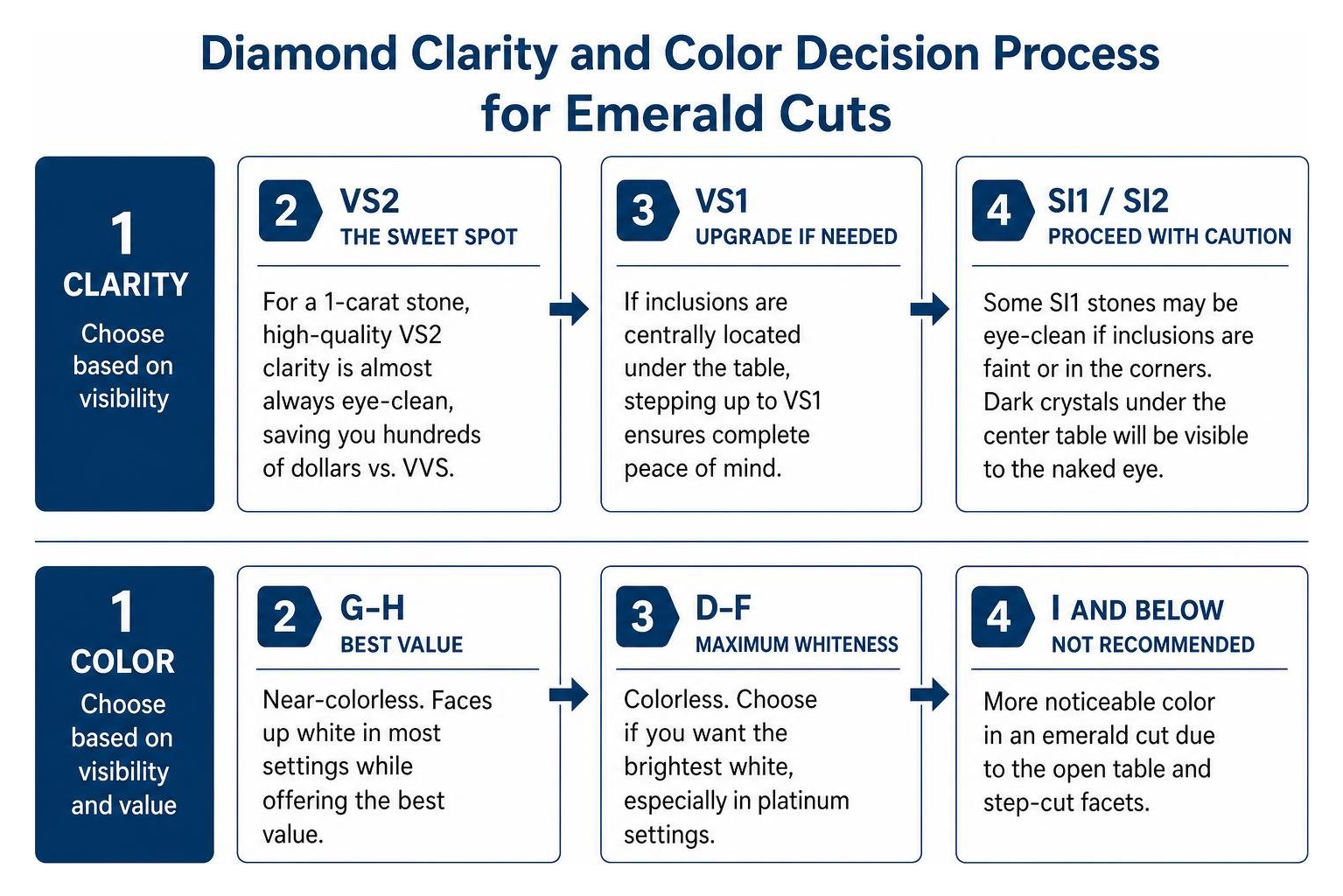
- VS2 Clarity (The Sweet Spot): For a 1-carat stone, a high-quality VS2 clarity grade almost always provides an eye-clean stone, saving you hundreds of dollars compared to VVS grades.
- VS1 Clarity: If the stone's inclusions are centrally located under the table, stepping up to VS1 ensures complete peace of mind.
- SI1 / SI2 Clarity: Proceed with caution. While some SI1 stones are eye-clean if the inclusions are faint or pushed to the corners, dark crystal inclusions under the center table will be visible to the naked eye.
Color: Finding the Warmth Balance
Brilliant cuts disperse color throughout their sparkle, masking minor body tint. Emerald cuts act like clear pools of water, making subtle body color easier to notice, especially in the corners.
- G to H Color (The Best Value): In a 1-carat size, G and H grades look crisp, bright, and near-colorless to the unaided eye once set in white gold or platinum.
- I to J Color: If you are setting your diamond in warm yellow gold or rose gold, an I or J color stone will complement the metal beautifully while freeing up budget for cut and clarity.
- D to F Color: Colorless grades look pristine, but carry a substantial price premium that is generally unnecessary unless paired with platinum and high clarity for collectors.
Recommended Grade Benchmarks for a 1 Carat Emerald Cut:
- Clarity: VS1 to VS2 (Eye-clean verified)
- Color: G or H (for white metals) | I or J (for yellow or rose gold)
- Depth: 61% – 67%
- Table: 61% – 69%
- Polish / Symmetry: Excellent / Very Good
Best Setting Styles to Enhance and Protect Step Cuts
Emerald cuts feature clipped, diagonal corners that create their iconic octagonal silhouette. While these cropped corners are naturally sturdier than the sharp tips of a princess or marquise cut, they still require thoughtful protection in daily wear.
1. Classic Four-Corner Prong Solitaires
Four-prong settings placed specifically on the cut corners secure the stone's vulnerable points while leaving the sides open to invite maximum light. Chevron or "claw" prongs add a crisp, modern aesthetic that accentuates the stone's clean geometry.
2. Bezel and Semi-Bezel Mountings
A bezel setting wraps a thin rim of metal entirely around the perimeter of the stone. This provides maximum protection for active lifestyles and highlights the step-cut profile. Semi-bezels wrap only the north-south or east-west edges, blending security with open side profiles.
3. Three-Stone Designs with Tapered Baguettes
A vintage-inspired favorite, pairing an emerald cut center diamond with tapered baguette side stones reinforces the step-cut theme. The baguettes draw the eye upward toward the center stone and create a cohesive Art Deco look.
4. Subtle Pavé and Hidden Halos
If you want the geometric lines of an emerald cut with a touch of brilliant scintillation, a hidden halo tucked beneath the center stone or a delicate pavé band provides sparkle without overshadowing the center diamond's mirror reflections.
Price Factors and Common Pitfalls to Avoid
The typical price for a natural 1 carat emerald cut diamond ranges from $2,500 to $8,000, depending heavily on the combination of color, clarity, and cut precision.
When shopping in this category, keep an eye out for these common pitfalls:
- The "Windowing" Effect: Always look at the diamond from the top down. If you can clearly read text placed underneath the stone, the cut is too shallow, allowing light to leak straight through instead of reflecting back.
- Severe Extinction: If facets turn completely black from head-on viewing angles, the depth or facet alignment is causing light cancellation.
- Buying Purely on Paper: Because step cuts do not receive a standard cut grade on lab certificates, two diamonds with identical specs on a report can look completely different in real life. Video review or in-person inspection is essential.
- Overpaying for Flawless Clarity: Buying an IF (Internally Flawless) or VVS1 stone often means paying a hefty premium for microscopic details you will never see without a 10x jeweler's loupe.
Frequently Asked Questions About 1 Carat Emerald Cuts
How large does a 1 carat emerald cut diamond look on the finger?
Thanks to its elongated footprint of approximately 7.0mm by 5.0mm, an emerald cut diamond creates a slimming, lengthening visual effect on the hand. It covers a larger vertical area of the finger than a round brilliant cut of equal weight, making it look substantial without feeling bulky.
What is the most popular length-to-width ratio for an emerald cut?
The industry favorite is between 1.40 and 1.50. This produces the classic rectangle that balances length and width harmoniously. Ratios closer to 1.30 offer a stockier look, while ratios above 1.55 provide a dramatic, slender silhouette.
Is a 1 carat emerald cut diamond cheaper than a round brilliant?
Yes. On average, emerald cuts cost roughly 10% to 20% less per carat than round brilliant diamonds of matching color and clarity. The diamond cutting process preserves more of the rough crystal structure, lowering production costs.
Conclusion
Finding the sweet spot for a 1-carat emerald cut comes down to prioritizing what you can actually see: balanced proportions, eye-clean VS clarity, and a bright G-H color profile. By focusing on cut quality over unnecessary clarity premiums, you get a stunning, sophisticated stone that balances everyday durability with timeless style.
At Geoffrey's Diamonds Campbell, we bring four decades of fine-jewelry expertise to helping you select or custom-design the perfect piece. Backed by our lifetime craftsmanship warranty and comprehensive showroom services—including custom design, repairs, and appraisals—our team is here to guide your journey. Explore our curated collection of engagement rings to discover the elegance of a step-cut diamond crafted to last a lifetime.