


Find a Trusted Jeweler to Fix Your Necklace Near You
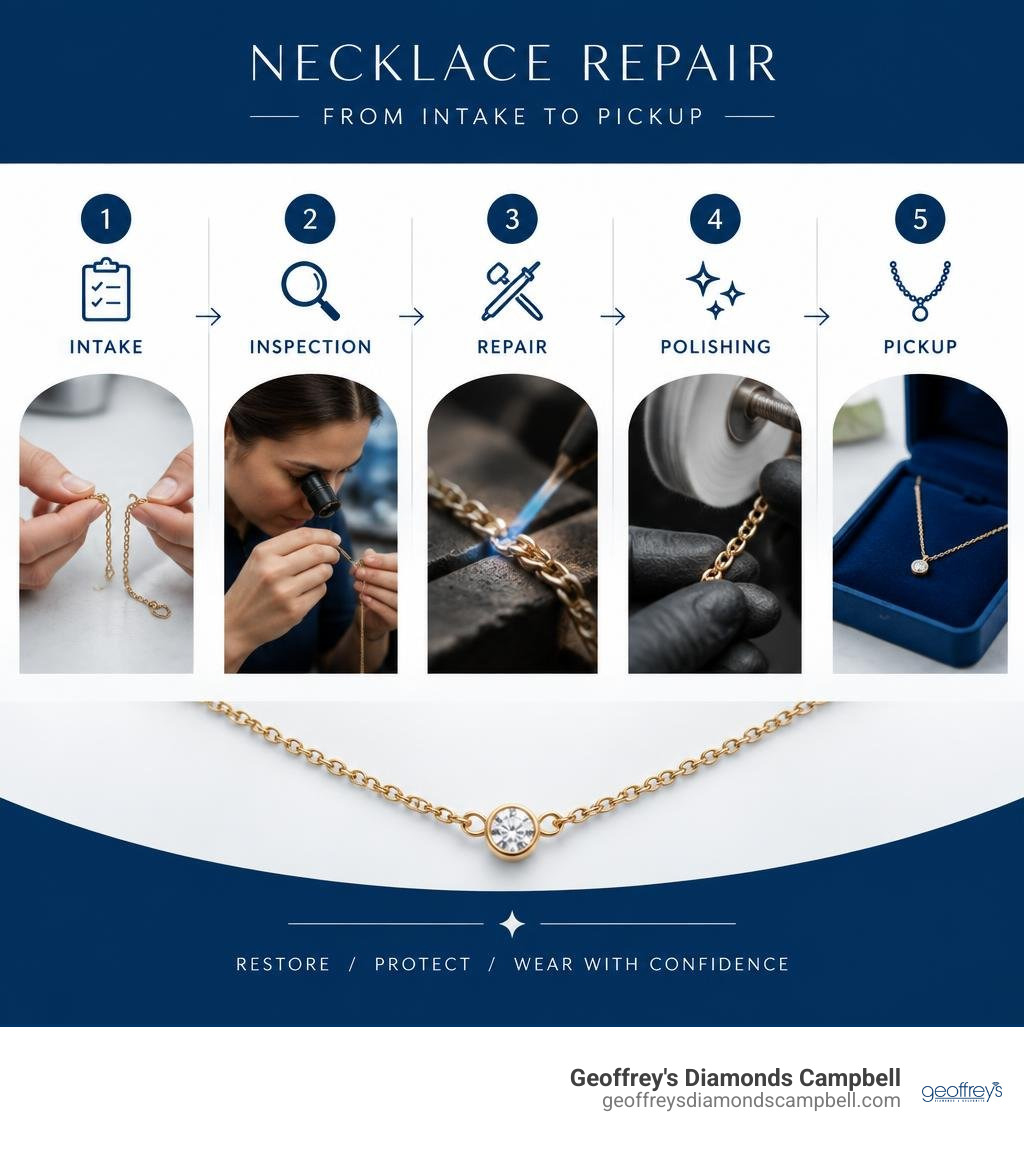
To fix a necklace near you, bring the chain, clasp, and any loose pieces to a qualified local jeweler for an in-person inspection. A bench jeweler can tell you whether the best solution is soldering a broken link, replacing a clasp, closing a jump ring, repairing a pendant bail, or reinforcing a weak area. For more background on how jewelers evaluate damage, the jewelry repair process covers common bench techniques used to restore fine chains.
Simple chain and clasp repairs may be completed the same day, while delicate, hollow, or heavily damaged chains can need several business days. Ask for a clear estimate before work begins, whether the repair is completed in-house, and what workmanship guarantee applies.
For a necklace you wear every day, an heirloom, or a meaningful pendant, professional repair is usually safer than a DIY fix. The right repair should restore secure wear while keeping the chain's finish and pattern as consistent as possible.
Professional Necklace Repair: Common Types and Solutions
When searching online to fix a necklace near you—or typing "fix necklace near me" into a local map search—the key is finding a qualified bench jeweler who can properly evaluate the break. The specific technique required depends heavily on where the failure occurred, the chain’s architecture, and the metal alloy. Fine jewelry requires microscopic precision—using either traditional torch soldering or advanced laser welding—to ensure the repair holds strong without damaging nearby design elements.

Whether you are wearing simple gold or silver chains from our broader necklaces collection or an intricate designer pendant, experienced bench jewelers evaluate every component to determine the most stable, invisible repair path.
Chain Soldering and Link Reinforcement
Chain breakage is the most frequent jewelry mishap we see at our bench. A sudden snag on a sweater, an accidental tug from a toddler, or simple friction over years can cause a metal link to shear open or thin out.
To repair standard broken links, our jewelers realign the fractured edges under magnification, apply a precise flux and solder alloy that matches your metal's purity (such as 14k yellow gold, 18k white gold, or 950 platinum), and bond the seam seamlessly. For heavier profiles like curb, figaro, and Cuban link chains, link reinforcement may be required to build up metal volume where friction has worn neighboring links thin.
On more intricate patterns like wheat, rope, and box chains, precision laser welding allows us to target micro-fractures without flooding surrounding links with heat, preserving natural flexibility and drape across classic diamond necklaces and everyday chains alike.
Clasp Replacement and Jump Ring Repair
A chain is only as secure as the mechanism holding its ends together. Clasps endure constant mechanical stress and contain tiny internal steel springs that can corrode, lose tension, or seize over time.
- Spring Ring Clasps: Often found on ultra-fine chains, these circular clasps can lose spring retention, leaving the latch slightly ajar.
- Lobster Clasps: The industry standard for durable daily wear; when the internal spring fatigues, the lever will fail to snap shut firmly.
- Barrel and Box Clasps: Common on heavy chains and statement necklaces; the internal tongue or figure-eight safety catches can bend or lose tension.
- Open Jump Rings: The small round ring connecting the clasp to the chain can stretch open under moderate force. A professional repair always involves soldering or laser-welding this jump ring closed so it cannot pull apart under tension.
If your clasp slips open unexpectedly, replacing it with a new, properly proportioned clasp is an affordable, quick fix that prevents the tragic loss of your entire necklace.
Pendant Bail Repair and Stone Tightening
The bail is the small metal loop or hinge at the top of a pendant that allows it to glide freely along your chain. Because the chain constantly rubs against the inside of the bail, the metal slowly wears down over years of wear, eventually becoming paper-thin. If left unaddressed, the bail can snap, sending your pendant falling to the floor.
During a bail restoration, our master jewelers add fresh metal to reinforce the interior loop, rebuild worn joints, or replace the bail entirely with a reinforced component. At the same time, we inspect any mounted stones—especially on gemstone necklaces—tightening loose prongs, re-tipping worn claws, and finishing the piece with a thorough ultrasonic cleaning so your jewelry returns home looking brand new.
Necklace Repair Cost and Turnaround Time Breakdown
Understanding what goes into the cost and timeline of jewelry repair helps you plan with confidence. Because fine jewelry involves diverse metals, structural designs, and labor techniques, pricing reflects the complexity of the piece and the time required at the bench.
| Repair Service Type | Typical Price Range | Estimated Turnaround Time | Complexity Level |
|---|---|---|---|
| Basic Chain Solder (1 Break) | $20 – $50 | Same Day to 2 Business Days | Low to Moderate |
| Additional Solder Joints | $15 – $30 each | Same Day to 2 Business Days | Low |
| Clasp / Jump Ring Replacement | $30 – $90+ | Same Day to 3 Business Days | Low to Moderate |
| Delicate / Hollow Chain Solder | $60 – $150+ | 2 to 5 Business Days | High |
| Pendant Bail Rebuilding / Retipping | $45 – $120+ | 2 to 5 Business Days | Moderate to High |
| Full Chain Restringing / Complex Rebuild | $75 – $200+ | 3 to 7 Business Days | High |
How Much Does It Cost to Fix a Necklace?
Basic chain soldering and jump ring repairs generally start around $20 to $30 for standard sterling silver and gold chains. If your necklace has multiple breaks or requires structural link rebuilding, the price scales based on the metal type and bench time required.
Clasp replacements typically range from $30 to $90+, depending on whether you need a lightweight spring ring, a heavy solid-gold lobster clasp, or a specialized locking mechanism. For delicate, hollow, or micro-gauge chains, repairs typically start around $60 and can reach $150+ because they require meticulous laser micro-welding to avoid melting the paper-thin surrounding walls. You should always receive a transparent, itemized estimate before any work begins on your piece.
How Long Does Professional Chain Repair Take?
Many straightforward repairs—such as closing an open jump ring, swapping out a faulty lobster clasp, or executing a single torch solder on a solid curb chain—can often be completed the very same day or within a few hours.
More complex projects, such as rebuilding worn links across an antique chain, repairing hollow rope chains, or resetting delicate gemstones around a bail, typically require 2 to 5 business days. This timeframe ensures our master bench jewelers can perform the micro-soldering, hand-polish the entire length, and run rigorous structural quality control checks before you pick it up.
Evaluating Your Piece: Repair, Replace, or Restyle?
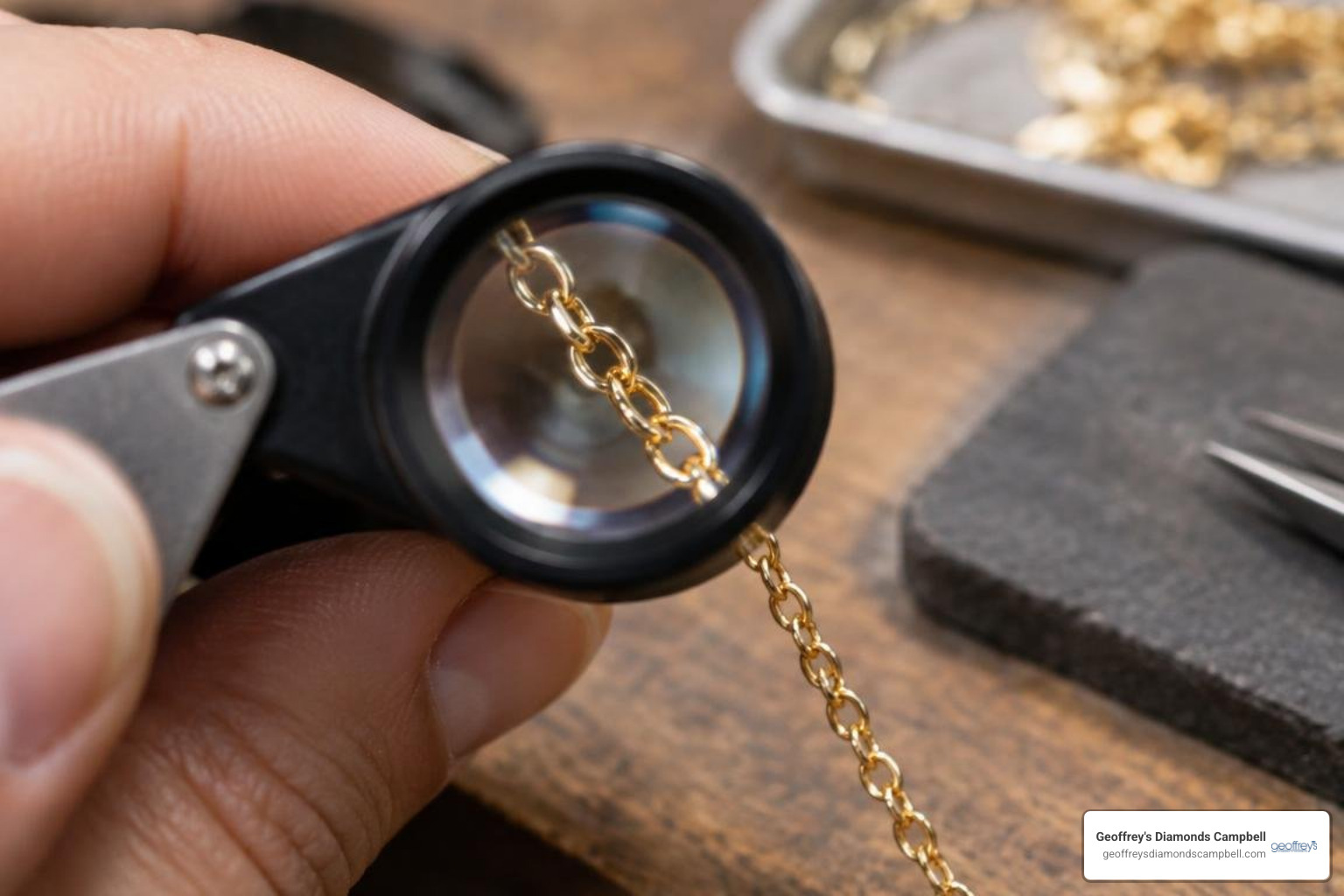
Not every broken chain should be treated the same way. When a necklace arrives at our showroom, we place it under high-power magnification to evaluate the overall health of the metal, checking for hidden fractures, metal fatigue, and previous repair seams.
Can Delicate Chains Be Safely Restored?
Yes, delicate and thin chains can almost always be safely repaired, but they demand the right technology. Traditional torch soldering spreads ambient heat across nearby links, which can easily melt thin metal or fuse flexible links together into a stiff, unwearable knot.
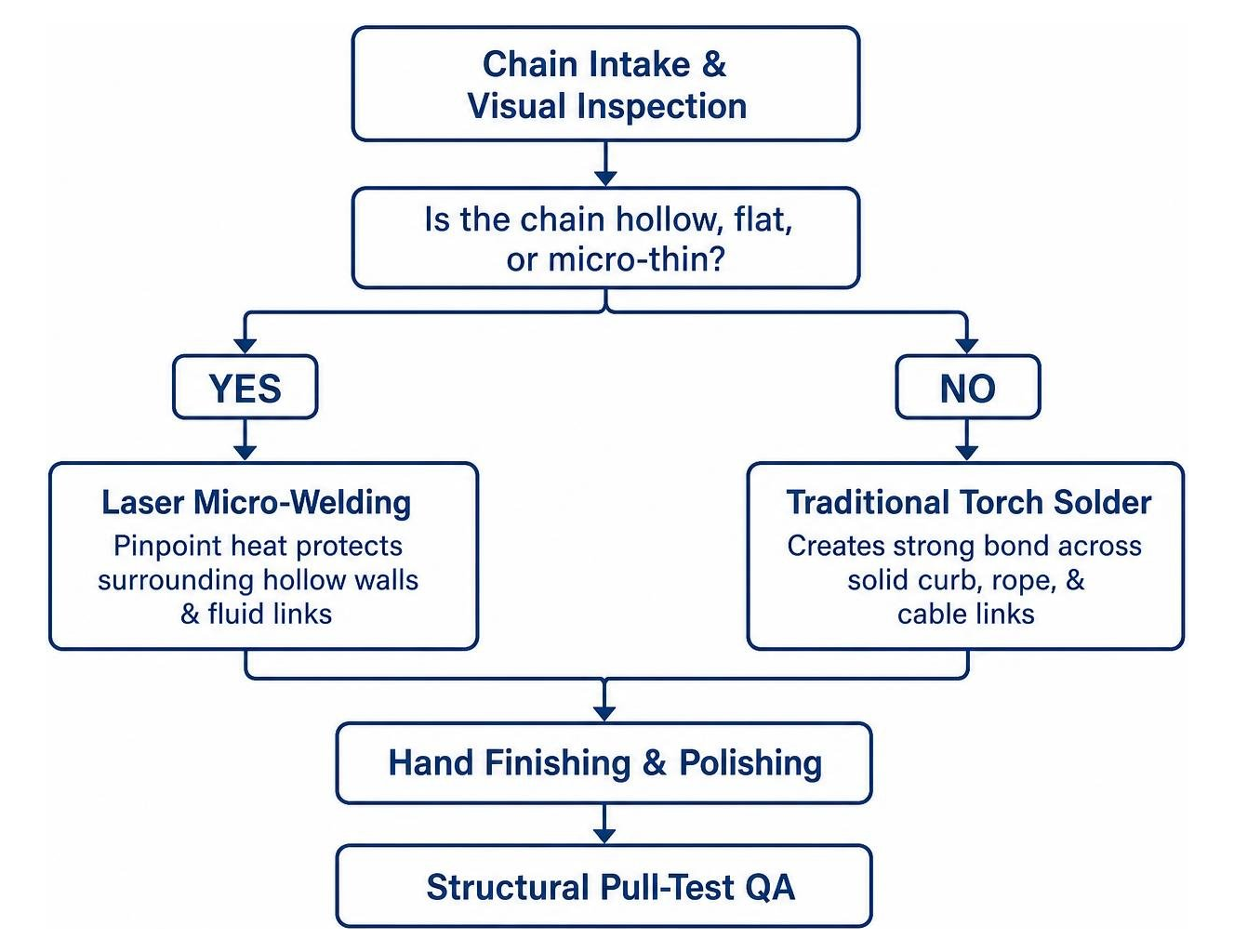
To protect fragile pieces—such as herringbone chains, snake chains, and hollow rope necklaces—we utilize precision laser welding. The laser delivers a microscopic burst of energy directly to the exact millimeter of the fracture, joining the metal instantly without heating the surrounding area. This preserves the structural integrity of thin-walled jewelry and prevents noticeable stiffness.
Should You Repair or Replace a Damaged Chain?
While we can fix almost any broken necklace, there are situations where replacement or redesign makes more practical sense:
- Metal Fatigue Across Multiple Links: If a chain is snapping every few weeks in different places, the entire alloy has likely suffered metal fatigue from years of friction. Paying for repeated individual solders quickly exceeds the replacement value of the chain.
- Hollow Chains with Extensive Crushing: When a hollow gold chain is severely crushed or flattened across several inches, soldering individual spots cannot restore its original round profile.
- Sentimental Value Always Wins: If the piece is an irreplaceable family heirloom, a gift from a loved one, or holds deep emotional significance, investing in comprehensive restoration is always worthwhile.
If a broken chain has reached the end of its wearable life, you can explore our full collection of fine tennis necklaces for a fresh look, or consult with our artisans about custom jewelry restyling to melt down your original gold and incorporate your existing gemstones into a brand-new, modern heirloom. For high-value pieces, pairing repairs with professional jewelry appraisal ensures your investment stays fully documented and insured.
How to Prevent Future Breaks and Maintain Chain Integrity
Regular maintenance and mindful daily wear keep your necklaces looking brilliant while significantly reducing trips to the repair bench.
- Remove Necklaces Before Bed: Tossing and turning creates severe torsional strain on delicate chains, twisting links until they kink or shear off entirely.
- Take Them Off Before Exercise: Sweating, snagging on gym towels, and accidental pressure from workout gear are leading causes of sudden chain breaks.
- Store Each Chain Individually: Never toss multiple necklaces into a single pouch or dish. Fasten the clasps and hang them vertically or store them in partitioned jewelry boxes to avoid knots that weaken individual links.
- Put Jewelry on Last: Apply lotions, hairsprays, cosmetics, and perfumes before putting on your necklace. Harsh chemicals and aerosol propellants can degrade solder seams and dull precious metal finishes.
- Inspect Weak Points Regularly: Periodically examine your clasp, jump rings, and pendant bail under good lighting. If you notice a clasp closing slowly or an open gap in a jump ring, bring it in before it separates completely.
Frequently Asked Questions About Local Necklace Repair
Will the solder repair point be visible on my chain?
On most solid chain designs—such as cable, curb, Cuban link, and figaro styles—a professional repair is virtually invisible to the naked eye. Our jewelers carefully match the solder alloy to your exact metal color and karat weight, then file, buff, and polish the seam to a mirror finish. On flat, high-sheen designs like herringbone or liquid silver chains, a very slight seam or minor stiffness at the exact point of the repair may be noticeable under close inspection, but we always discuss this with you beforehand.
Is necklace repair work backed by a warranty?
Yes. Reputable fine jewelers stand behind their bench craftsmanship. Professional repairs typically come with a workmanship guarantee covering the specific joint or clasp replaced during the service. At Geoffrey's Diamonds Campbell, we differentiate ourselves with four decades of bench expertise and a dedicated commitment to craftsmanship quality on all our in-house repairs.
Do I need an appointment for chain repair estimates?
No appointment is necessary. You are welcome to walk into our showroom during normal business hours with your broken necklace and any detached pieces. Our team will examine the damage under magnification, explain the required repair steps, and provide an instant, transparent estimate on the spot at no charge.
Conclusion
A broken chain or loose clasp does not have to mean retiring your favorite piece of jewelry to a drawer. With the right bench expertise, advanced laser technology, and careful attention to detail, broken necklaces can be restored to pristine, durable condition so you can wear them with complete peace of mind.
For over 40 years, Geoffrey’s Diamonds Campbell has served as a trusted family-owned jeweler, providing expert custom design, thorough appraisals, and trusted local jewelry repair services backed by our lifetime craftsmanship warranty. Visit our Campbell, California showroom today for a free inspection and upfront estimate, and let our master bench jewelers bring your treasured necklaces back to life.