


How to Choose 14k Gold Wedding Rings
14k gold wedding rings are a strong choice for daily wear. They contain 58.3% pure gold, with other metals added for strength. That makes them more durable than 18k gold rings while keeping the look of gold.
Start with the color you love: yellow, white, or rose. Then try on a few band widths and finishes to see what feels comfortable beside an engagement ring. If you have sensitive skin, ask which metals are in the alloy, especially when choosing white gold.
Why Choose 14k Gold Wedding Rings: Durability, Value, and Purity
When shopping for wedding jewelry in 2026, finding the sweet spot between prestige, aesthetic appeal, and real-world durability is essential. Pure gold (24 karat) is naturally soft, dense, and malleable. If you were to wear a pure 24k gold ring while lifting weights, doing yard work, or carrying heavy grocery bags, it would bend, warp, and scratch easily.
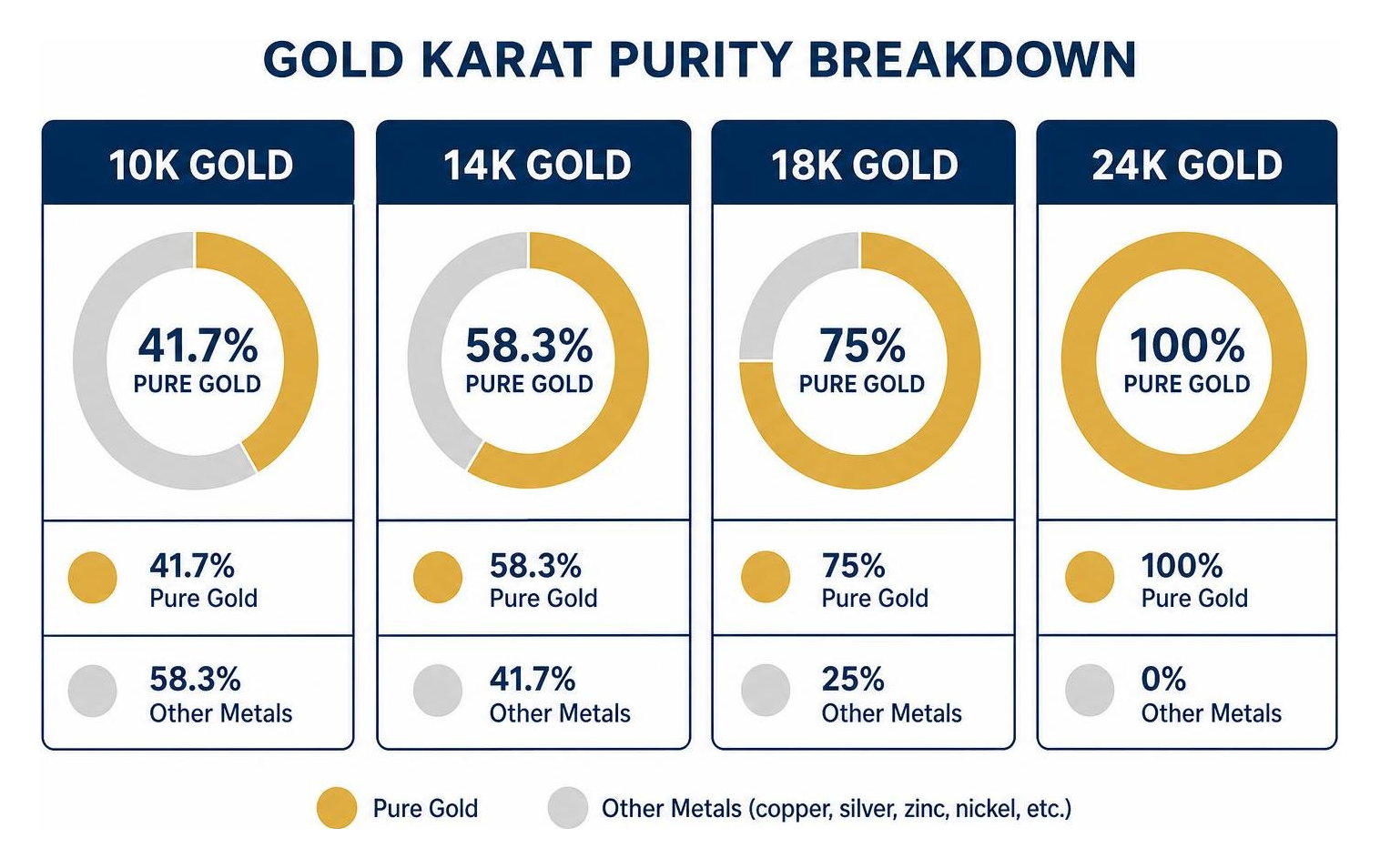
To make gold practical for everyday life, master jewelers melt it alongside durable alloy metals such as copper, silver, zinc, and nickel. The karat system measures how much pure gold exists within the finished metal alloy out of 24 parts:
- 24k Gold: 100% pure gold (24/24 parts). Rich orange-yellow, exceptionally soft, and impractical for daily bridal wear.
- 18k Gold: 75% pure gold (18/24 parts). Vibrant and luxurious, but prone to surface scratching and bending under pressure.
- 14k Gold: 58.3% pure gold (14/24 parts). The gold standard for fine bridal jewelry in the United States, offering an ideal balance of warmth, structural integrity, and value.
- 10k Gold: 41.7% pure gold (10/24 parts). Highly durable and scratch-resistant, but contains more base alloy than actual gold, leading to a paler tone and higher allergy risks.
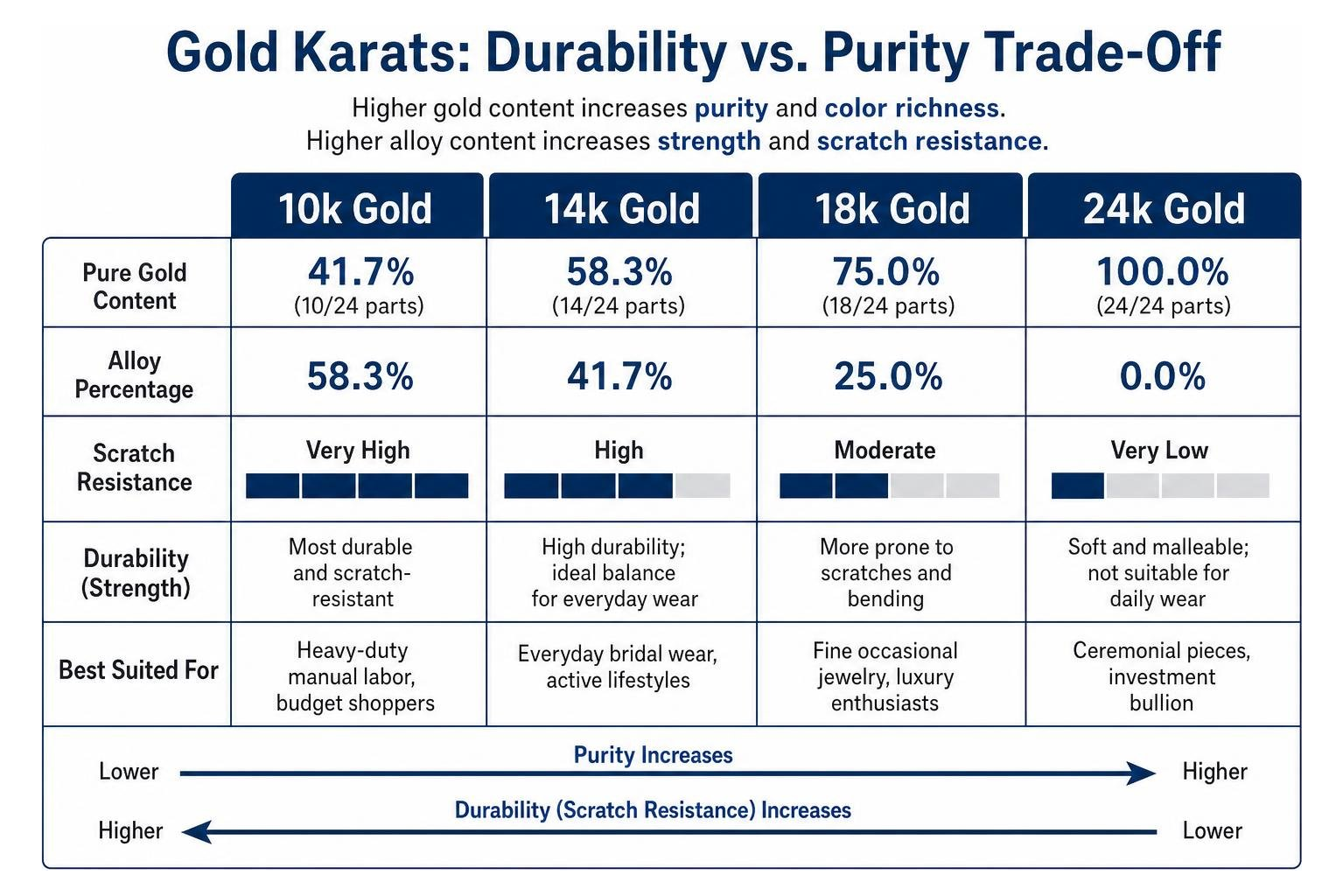
Because 14k gold strikes the perfect balance between precious metal prestige and resilience, it accounts for over 60% of all gold wedding ring sales across the country. In fact, 14k gold is roughly two to three times more scratch-resistant than 18k gold, making our curated collection of solid gold wedding bands an enduring choice for active lifestyles. According to the Gemological Institute of America, karatage is a key factor in determining a gold alloy's durability and suitability for everyday jewelry.
| Karat Purity | Pure Gold Content | Alloy Percentage | Scratch Resistance | Best Suited For |
|---|---|---|---|---|
| 10k Gold | 41.7% | 58.3% | Very High | Heavy-duty manual labor, budget shoppers |
| 14k Gold | 58.3% | 41.7% | High | Everyday bridal wear, active lifestyles |
| 18k Gold | 75.0% | 25.0% | Moderate | Fine occasional jewelry, luxury enthusiasts |
| 24k Gold | 100.0% | 0.0% | Very Low | Ceremonial pieces, investment bullion |
Comparing 14k Gold Wedding Rings to Platinum and 18k Gold
Choosing the right metal involves weighing daily resilience against your budget. While 14k gold remains the most versatile option, understanding how it stacks up against other popular precious metals helps you make an informed decision:
- Platinum vs. 14k Gold: Platinum is a naturally white, dense, hypoallergenic metal. However, it is significantly heavier and typically carries a 40% to 80% price premium over 14k gold due to its rarity and casting complexity. Platinum also develops a soft "patina" (a satiny, micro-scratched matte texture) over time, whereas 14k white gold maintains its bright, mirror-like polish when properly maintained.
- 18k Gold vs. 14k Gold: While 18k gold delivers richer color saturation, it is softer and noticeably more expensive. On average, a quality 14k gold wedding band ranges from $200 to $1,500 depending on ring weight and design complexity, whereas an equivalent 18k ring often costs 30% to 50% more.
Exploring various wedding band styles allows you to compare these distinct metals side by side to see which one best aligns with your daily routine and design vision.
Hypoallergenic Qualities and Metal Sensitivity
Skin sensitivities are an important consideration when selecting fine jewelry. Pure gold is hypoallergenic and chemically inert, meaning it will never cause an allergic reaction on its own. Any allergic response associated with gold jewelry is caused by the alloyed metals blended into the piece.
Nickel, historically used to whiten yellow gold and increase structural hardness, is the most common culprit behind contact dermatitis (which can cause minor itching, redness, or skin irritation). High-grade 14k yellow and rose gold alloys rely primarily on copper, silver, and zinc, making them safe for the vast majority of wearers. If you have known skin sensitivities or a diagnosed nickel allergy, let your jeweler know so they can provide nickel-free 14k white gold alloys (which utilize palladium instead) or guide you toward yellow gold, rose gold, or platinum options.
Essential Design Factors: Profiles, Finishes, and Custom Details
Selecting your wedding band involves more than just choosing a metal; it is also about finding the right proportions, cross-sectional silhouette, and surface texture for your hand.
Key factors to consider include:
- Band Width: Band widths generally range from an ultra-delicate 1.5mm up to a substantial 8mm or wider. Narrower bands (1.5mm to 3.0mm) are standard for matching alongside classic wedding bands and engagement rings, while wider bands (4.0mm to 8.0mm) are favored in men's bands.
-
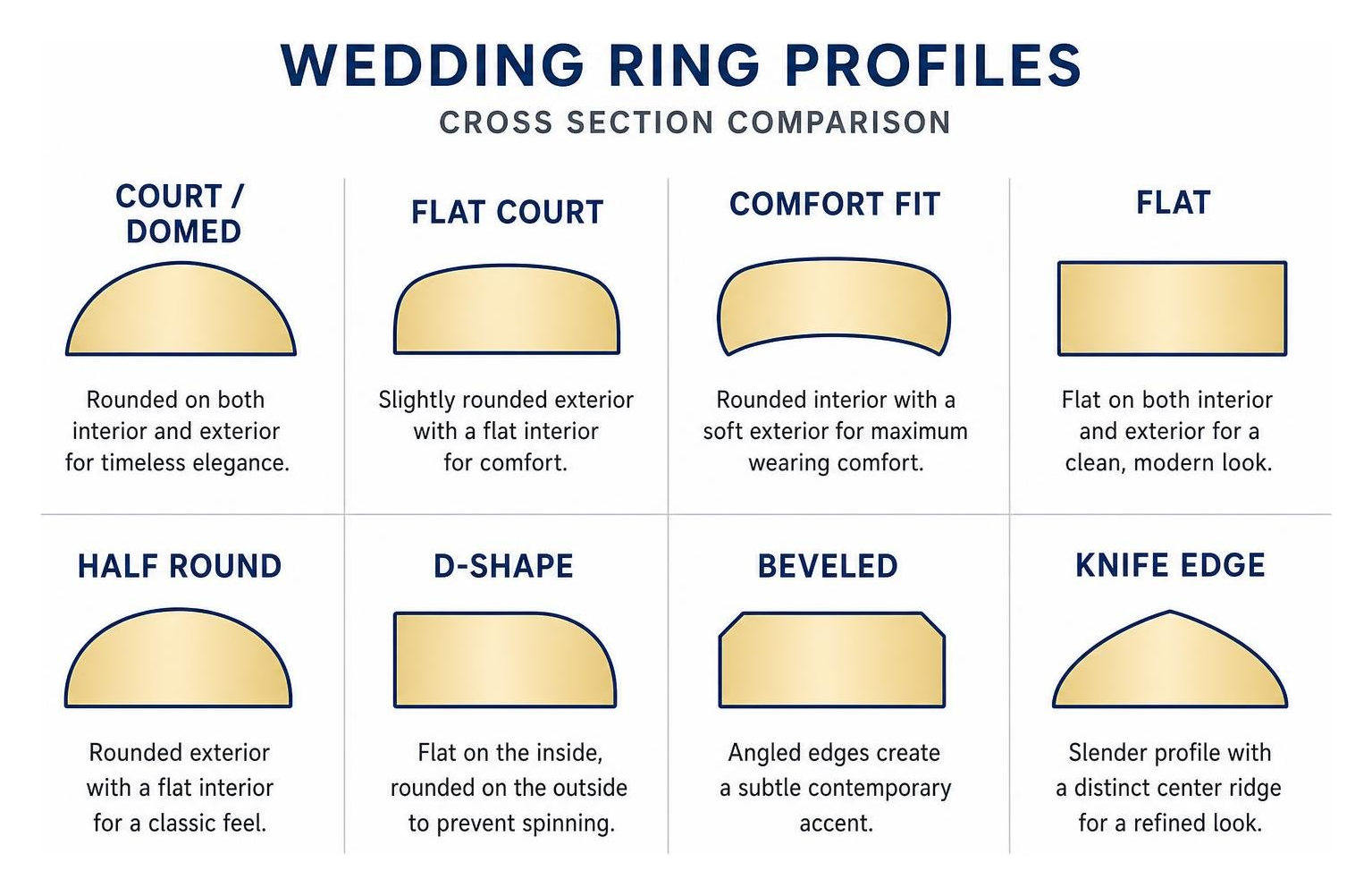
Ring Profile:
- Traditional Court / Domed: Rounded on both the interior and exterior for timeless elegance.
- Flat Profile: Modern and architectural, featuring clean, square outer edges.
- Comfort Fit: Features a gently domed inner surface that slides smoothly over knuckles and prevents skin pinching during everyday wear.
-
Surface Finishes:
- High Polish: A reflective, mirror-like finish that catches the light brilliantly.
- Satin / Matte: A silky, non-reflective luster that subtly masks minor everyday scuffs.
- Brushed / Hammered: Textures that give the band organic character, depth, and a contemporary look.
Before finalizing your design details, make sure to accurately find your ring size to ensure a comfortable, secure fit across all seasons.
Popular Styles and Setting Options for 14k Gold Wedding Rings
Approximately 70% of couples select yellow or white gold for their wedding bands, with 14k serving as the preferred purity across traditional and modern aesthetics alike.
- 14k Yellow Gold: Offers a warm, romantic glow that never tarnishes. Its timeless appeal pairs effortlessly with vintage silhouettes as well as minimalist, modern designs.
- 14k White Gold: Delivers a cool, brilliant luster achieved by alloying yellow gold with white metals and plating it with ultra-reflective rhodium. It is a fantastic choice for accentuating colorless diamonds.
- 14k Rose Gold: Crafted by blending gold with copper alloys, rose gold offers a warm, pinkish blush that flatters every skin tone.
For those who want extra brilliance, diamond wedding bands offer a dazzling touch. You can choose versatile half eternity bands—which showcase sparkling diamonds along the top half while leaving a solid metal base for easy resizing—or opt for designs tailored to fit flush against your engagement rings.
Custom Engraving and Bespoke Metal Finishes
Your wedding ring represents your unique story, and customizing your band ensures it is truly one-of-a-kind. Precision laser engraving lets you preserve personal milestones on the inside or outside of your band, including:
- Wedding dates, Roman numerals, or geographical coordinates of where you met.
- Meaningful quotes, secret nicknames, or personal vows.
- Exact replications of your partner's actual handwriting or fingerprint.
Beyond personalized inscriptions, our master craftsmen can incorporate hand-carved filigree, millgrain milgrain borders, and contrasting metal finishes. If you want a tailored silhouette designed around an existing ring, explore custom bridal jewelry and start your custom design with our team.
How to Care for and Maintain Gold Jewelry
While 14k gold is remarkably resilient, proper cleaning keeps its luster bright for generations. Oils, lotions, soaps, and daily dust can accumulate beneath stone settings and along polished metal surfaces.
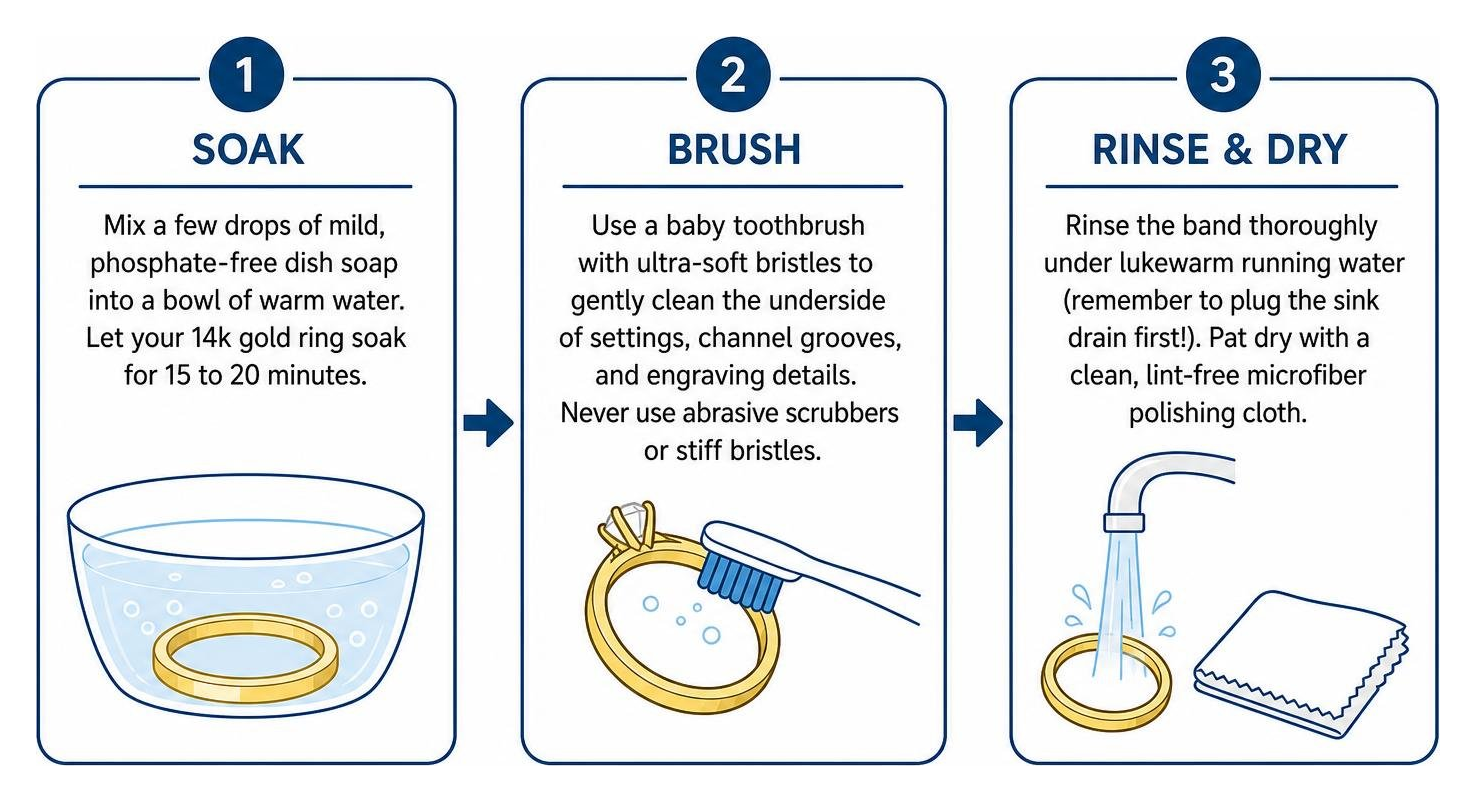
Follow this simple cleaning routine at home:
- Soak: Mix a few drops of mild, phosphate-free dish soap into a bowl of warm water. Let your 14k gold ring soak for 15 to 20 minutes to soften oils and residue.
- Brush: Use a baby toothbrush with ultra-soft bristles to gently clean the underside of settings, channel grooves, and engraving details. Never use abrasive scrubbers or stiff bristles.
- Rinse and Dry: Rinse the band thoroughly under lukewarm running water (remember to plug the sink drain first!). Pat dry with a clean, lint-free microfiber polishing cloth.
Avoid exposing your gold jewelry to harsh household chemicals, abrasive cleaners, or swimming pool chlorine, which can weaken the alloy structure over time. For comprehensive care instructions and best practices, check out our guide on jewelry care and cleaning.
We also recommend scheduling an annual checkup with our studio for ultrasonic cleaning, prong inspections, and professional jewelry repair and restorations to keep your heirlooms in pristine shape.
Frequently Asked Questions About Gold Wedding Bands
How long do 14k gold wedding bands last with daily wear?
A 14k gold wedding band will easily last a lifetime and can be passed down for generations. Because 14k gold contains 41.7% durable alloy metals (such as copper, silver, and zinc), it resists bending, deep gouges, and excessive surface wear far better than higher-karat alternatives, making it ideal for everyday wear.
Does 14k white gold require regular maintenance?
Yes. Naturally, all gold drawn from the earth is yellow. To give 14k white gold its crisp, icy finish, it is alloyed with white metals and finished with a thin surface plating of rhodium (a rare platinum-group metal). Over one to three years of daily wear, this microscopic plating gently wears down, revealing a faint, warm champagne undertone. Re-polishing and re-plating your ring with rhodium quickly restores its original mirror shine.
Can a 14k gold wedding ring be easily resized?
Yes, solid 14k gold plain bands and half-eternity styles are straightforward to resize up or down by experienced jewelers. However, full eternity rings—where diamonds or gemstones encircle the entire band—cannot be resized without altering the underlying setting or stone alignment, so precise sizing during the initial design phase is essential.
Conclusion
Choosing your wedding ring is one of the most exciting milestones of your wedding journey. With its unmatched blend of structural strength, rich luster, and enduring value, 14k gold continues to be the ultimate metal choice for modern couples.
At Geoffrey's Diamonds Campbell, we bring four decades of jewelry expertise and custom design mastery to help you choose or create the perfect symbol of your commitment. Backed by our lifetime craftsmanship warranty, our expert gemologists and artisans are here to guide you every step of the way. Visit our showroom or schedule a personalized styling consultation to explore our exclusive collection of bridal jewelry and engagement rings in the Bay Area today.