


Why a 14k Gold Wedding Ring Makes Sense for Daily Wear
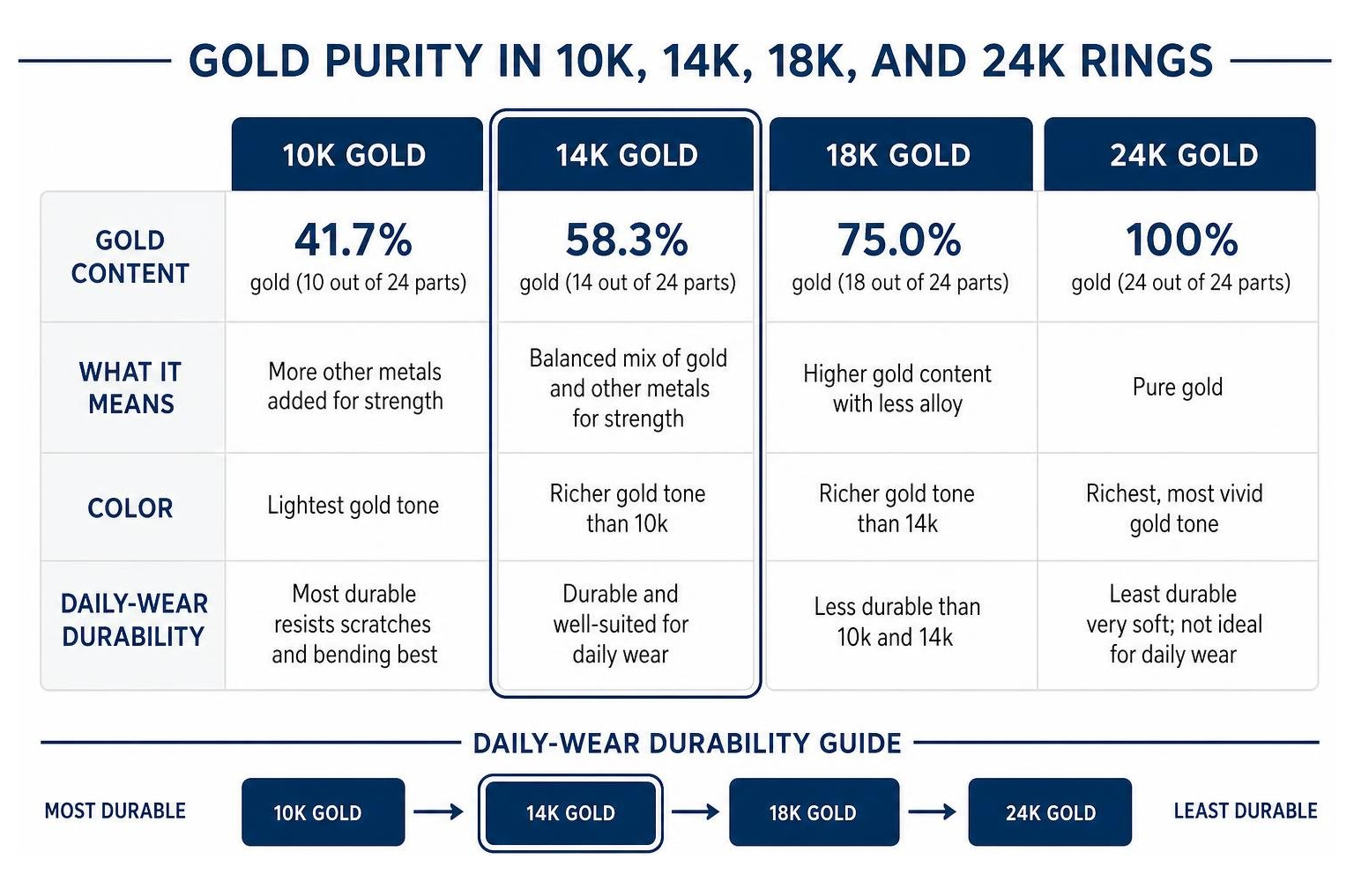
A 14k gold wedding ring is a strong choice for daily wear. It contains 58.3% gold, with other metals added for strength. That makes it more resistant to scratches and bending than higher-karat gold, while keeping a richer gold color than 10k. It will still pick up marks over time, but it offers a practical balance of beauty and durability.
If you're choosing a band to wear every day, start with the color you love - yellow, white, or rose gold - then compare fit, width, and finish. Those details may matter more to your comfort than a higher karat number. According to the Gemological Institute of America, gold is routinely alloyed with metals such as copper and silver precisely because pure gold is too soft for everyday jewelry.
Why Choosing a 14k Gold Wedding Ring Makes Practical Sense
When shopping for wedding bands, it is easy to assume that a higher karat always equals a better ring. In fine jewelry, however, pure gold is surprisingly soft. If you wore a ring made of pure gold while lifting weights, doing yard work, or carrying groceries, it would bend out of shape in short order.
Gold purity is measured in 24ths. That means 24k gold is 100% pure elemental gold. While 24k gold boasts unmatched prestige and a vivid, fiery hue, it lacks the structural integrity needed for a piece of jewelry meant to be worn continuously for decades. To make gold practical for everyday life, master jewelers melt it down and alloy it with stronger metals such as copper, silver, zinc, and nickel.
A 14k alloy hits the sweet spot: exactly 14 parts pure gold out of 24, which works out to 58.3% pure gold and 41.7% alloyed metals. This composition provides structural resilience while retaining the warmth, luster, and luxury of real gold. It is no surprise that over 60% of couples in the United States choose 14k gold for their bridal sets, and roughly 75% of all couples choose gold over alternative metals.
If you are exploring heirloom-quality solid gold wedding bands, understanding how karats compare can save you from buyer's remorse.
| Gold Karat | Pure Gold Content | Alloy Percentage | Relative Durability | Cost Level | Best Suited For |
|---|---|---|---|---|---|
| 10k | 41.7% | 58.3% | Highest scratch resistance; slightly brittle | Budget-friendly | Heavy manual labor, tight budgets |
| 14k | 58.3% | 41.7% | High durability; balanced resilience | Moderate / Best value | Everyday active wear, bridal rings |
| 18k | 75.0% | 25.0% | Moderate; prone to surface scuffs | Premium | Low-impact wear, intense color preference |
| 24k | 100% | 0.0% | Extremely soft; easily warped | Highest | Ceremonial jewelry, investment bars |
Comparing Durability Across Karats for a 14k Gold Wedding Ring
The durability of a gold ring comes down to its hardness and tensile strength. Pure gold sits around a 2.5 on the Mohs hardness scale—roughly the same hardness as a human fingernail. By alloying pure gold with copper, silver, or zinc, jewelers significantly increase the metal's yield strength.
While 18k gold features a rich 75% gold purity, its higher gold ratio leaves it prone to surface scratches, dings, and thinning over decades of friction. On the other end of the spectrum, 10k gold contains only 41.7% gold. While it is very hard, its dense mixture of base alloys can make it somewhat brittle during complex resizing, and it can exhibit slight discoloration over time when exposed to harsh chemicals or skin acids.
A 14k gold alloy strikes the ideal balance. It flexes under extreme pressure without cracking, resists deep gouges, and holds delicate diamond prongs firmly in place. For active lifestyles, desk work, and everything in between, it delivers dependable structural peace of mind.
Evaluating Color Richness Across Yellow, White, and Rose Gold
One of the best advantages of 14k gold is its versatility across different color profiles. Because 41.7% of the ring consists of complementary alloys, jewelers can tailor the metal's final shade without compromising its everyday strength.

- 14k Yellow Gold: Traditional, warm, and radiant. By combining pure gold with balanced amounts of silver and copper, 14k yellow gold produces a classic buttery glow. It offers a softer, more subtle tone than the brassy, intense yellow of 24k gold, complementing a wide variety of skin undertones.
- 14k White Gold: Bright, sleek, and contemporary. To achieve this silvery tone, pure gold is alloyed with white metals such as nickel, zinc, or palladium, and then electroplated with rhodium—a rare platinum-group metal. The result is a mirror-like white sheen that makes diamonds pop.
- 14k Rose Gold: Romantic, vintage, and warm. Rose gold gets its signature blush color from a higher concentration of copper in the alloy mix. Because copper is an exceptionally durable metal, 14k rose gold is actually the most scratch-resistant of the three classic colors.
Popular Band Styles, Finishes, and Customizations
A wedding band should reflect your personal taste and daily comfort. Whether your aesthetic leans minimalist, vintage, or bold, our curated wedding band styles offer a wide spectrum of profiles and artistic textures.
The profile of your ring dictates how it sits on your finger:
- Traditional Domed: Rounded on the outside and flat on the inside, creating a classic, light-catching silhouette.
- Flat Profile: Modern and architectural, with straight edges and a clean, contemporary appearance.
- Beveled Edge: A flat center with angled sides that add dimensional flair and catch the light from multiple angles.
- Comfort-Fit: Domed gently on the interior surface, allowing the band to slide smoothly over the knuckle and sit comfortably throughout temperature changes.
Classic Profiles and Textured Finishes
Surface finishes allow you to personalize even the simplest band. A high-polish mirror finish delivers timeless brilliance, reflecting light with every turn of your hand. If you prefer a subtler, modern look, matte and satin textures reduce shine while masking minor everyday scuffs.
For understated refinement, look to pieces like this 14k white gold satin finish band, which pairs a soft, brushed luster with polished beveled borders. If you love warm blush tones, a 14k rose gold satin finish band provides an eye-catching, contemporary alternative to high-shine surfaces.
Couples who appreciate refined simplicity often choose our classic wedding bands, which pair seamlessly with both solitaire and halo engagement rings.
Gemstone Accents and Custom Design
If you prefer extra sparkle on your hand, 14k gold serves as an exceptional structural foundation for precious gemstones. Thanks to the alloy's strength, prongs and channels remain secure against daily knocks and bumps.
You can explore endless settings in our collection of diamond wedding bands, including:
- Channel Settings: Diamonds are nestled between parallel walls of 14k gold, protecting the stones from snags and side impacts.
- Bezel Settings: A thin rim of gold surrounds each diamond completely, creating a modern, ultra-secure frame ideal for healthcare workers and athletes.
- Pavé and Micro-Pavé: Small diamonds line the band held by tiny beads of gold, offering continuous, glittering surface coverage.
- Eternity vs. Half-Eternity: Eternity bands feature stones circling the entire circumference, while half- or three-quarter eternity designs keep gemstones on top and solid gold on the bottom for easier future resizing.
For couples seeking one-of-a-kind symbolism, our team crafts bespoke heirlooms through our service for custom wedding bands in Campbell CA. Custom design allows you to mix contrasting gold colors, incorporate heirloom gemstones, or create custom contours that curve flush against an intricate engagement ring.
Pricing, Sizing, and Long-Term Value Factors
In recent years, the average price of a 14k gold wedding ring has typically ranged from $800 to $1,200 for classic profiles, with elaborate diamond-set bands reaching higher price points. The final cost of a ring depends on several key variables:
- Gold Market Weight: Wider, thicker bands require more raw gold by gram weight.
- Design Complexity: Hand-carved milgrain, custom filigree, and comfort-fit contours require greater artisanal labor.
- Stone Selection: The total carat weight, cut, color, and clarity of any accent diamonds.
- Current Spot Price of Gold: The global market valuation of gold bullion.
To explore the latest trending aesthetics and contemporary silhouettes, browse our new wedding bands to compare widths, weights, and price tiers.
From an investment and resale standpoint, 14k gold carries inherent value tied directly to its 58.3% pure gold content (known as melt value). While a fine jewelry piece should primarily be valued for its emotional significance and daily utility, gold remains an internationally traded commodity that retains lasting intrinsic worth across generations.
Furthermore, sustainability is a growing priority for modern couples. We prioritize recycled gold sources and conflict-free gemstones, ensuring your ring celebrates your love without compromising ethical standards.
Resizing Feasibility and Daily Fit
Your wedding ring should fit snugly enough not to slide off when washing your hands, yet comfortably enough to pass over your knuckle without pain.
Because 14k gold is ductile and strong, it can be resized up or down by an experienced jeweler with minimal stress to the metal. Bands with plain gold shanks are the simplest to resize, while full eternity diamond bands require precise planning because stones wrap around the entire perimeter.
If you are local to the South Bay, you can get professionally sized for wedding rings in Campbell CA. A master bench jeweler will measure your finger with calibrated sizing rings that match your target band width, ensuring a seamless, comfortable fit. You can also add custom laser engraving—such as a wedding date, initials, or a private phrase—to the interior shank for a meaningful personal touch.
Ring Care, Allergies, and Maintenance
Caring for 14k gold is straightforward, but regular maintenance ensures its luster endures for a lifetime.
When it comes to skin comfort, 14k yellow and rose gold are naturally well-tolerated by most people. However, some traditional 14k white gold formulations contain trace amounts of nickel to help bleach the natural yellow gold hue. For people with a diagnosed nickel allergy, contact with unplated nickel alloys can cause mild allergic contact dermatitis (redness or minor itching).
Fortunately, modern white gold bands are plated with a protective layer of pure rhodium, which creates a bright, hypoallergenic barrier between your skin and the base metal. If you have sensitive skin, re-plating your white gold ring every one to two years keeps this barrier intact while restoring its brilliant, showroom shine.
How to Clean and Maintain a 14k Gold Wedding Ring
To keep your ring sparkling between professional cleanings, use this simple home routine:
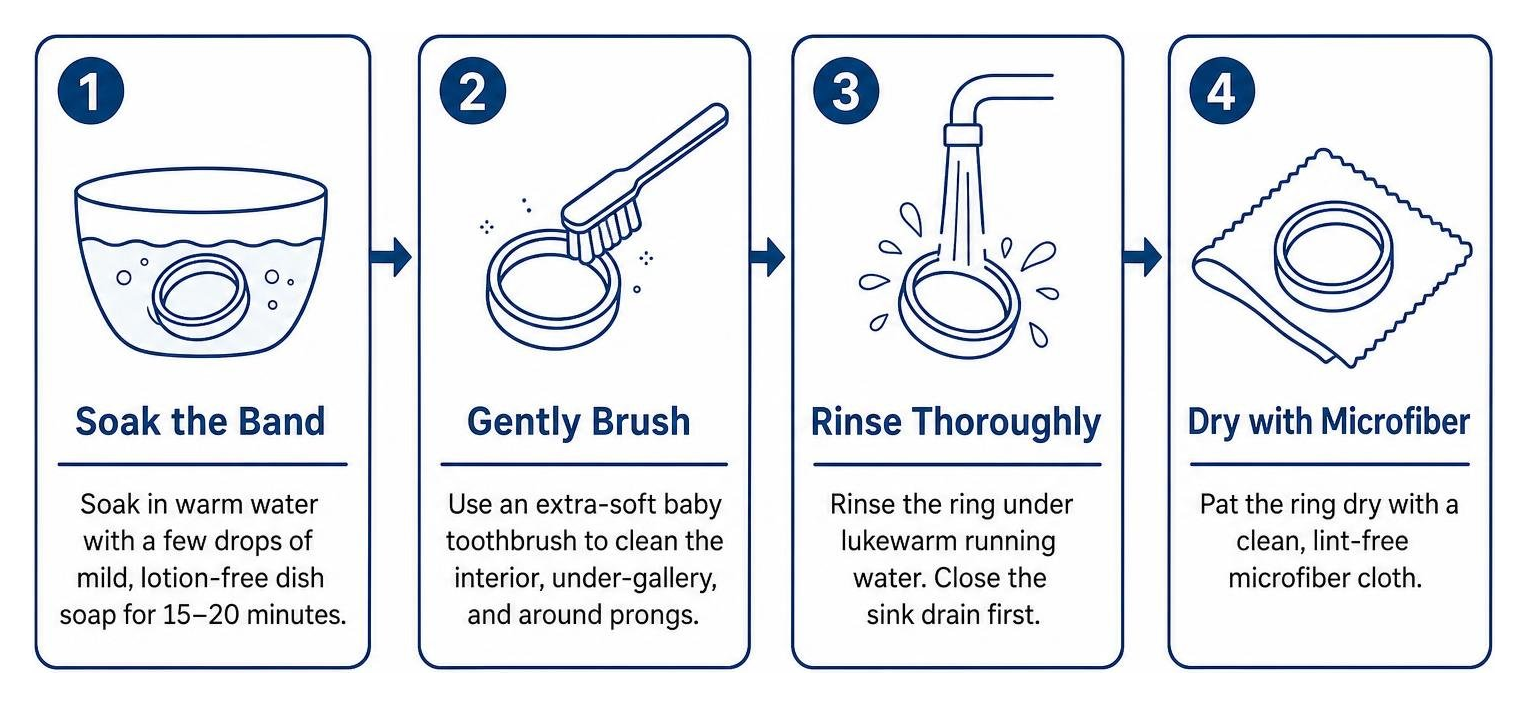
- Soak the Band: Fill a small bowl with warm water and mix in a few drops of mild, lotion-free dish soap. Let your ring soak for 15 to 20 minutes to break down hand lotions, oils, and surface dust.
- Gently Brush: Use an extra-soft baby toothbrush to gently clean the interior band, under-gallery, and around diamond prongs. Avoid stiff bristles, which can cause micro-scratches on polished surfaces.
- Rinse Thoroughly: Rinse the ring under lukewarm running water (remember to close the sink drain first).
- Dry with Microfiber: Pat the metal dry with a clean, lint-free microfiber cloth.
Avoid exposing your ring to harsh chemicals like chlorine bleach or hot tub sanitizers. Chlorine chemically attacks the secondary alloys in gold jewelry, causing microscopic stress fractures over time that can loosen prongs and weaken structural solder joints.
Frequently Asked Questions About Gold Bands
Is 14k gold suitable for sensitive skin?
Yes, the vast majority of people wear 14k gold daily without any skin reaction. 14k yellow and rose gold rely on copper, silver, and zinc, which rarely cause irritation. If you have a severe nickel sensitivity, opt for yellow gold, rose gold, palladium-based white gold, or keep your rhodium plating freshly maintained on standard white gold bands.
Will a 14k gold band tarnish or fade?
14k gold does not rust, tarnish, or corrode under normal conditions. Pure gold is an elemental noble metal that resists oxidation. While the alloy metals can react slightly to extreme chemical exposure (like pool chlorine or sulfur springs), regular daily wear and basic soap-and-water cleaning keep its natural color vibrant indefinitely.
How does 14k gold compare to other karats in cost and wear?
Higher-karat gold, such as 18k or 24k, contains more pure gold and therefore costs more per gram, since gold itself is the most valuable component of the alloy. However, that added purity comes at the expense of durability: 24k gold is far too soft for daily wear, and 18k gold scuffs more easily than 14k. By comparison, 14k gold offers a dependable middle ground, combining a lighter feel on the finger with broader budget flexibility and excellent day-to-day resilience.
Conclusion
Choosing the right wedding band does not have to be an overwhelming numbers game. While 18k and 24k gold carry high purity numbers, 14k gold remains the definitive standard for everyday bridal jewelry for good reason: it delivers stunning color, exceptional structural durability, and unmatched long-term value.
At Geoffrey's Diamonds Campbell, we bring four decades of fine jewelry expertise to help you discover or custom-craft the ring that tells your unique story. Backed by our lifetime craftsmanship warranty and comprehensive on-site services, every band is built to endure for generations.
Begin your search with an enduring classic like our 14kt White Gold 6mm Classic Wedding Band, or visit our Campbell, California showroom to try on styles and find your perfect daily fit.